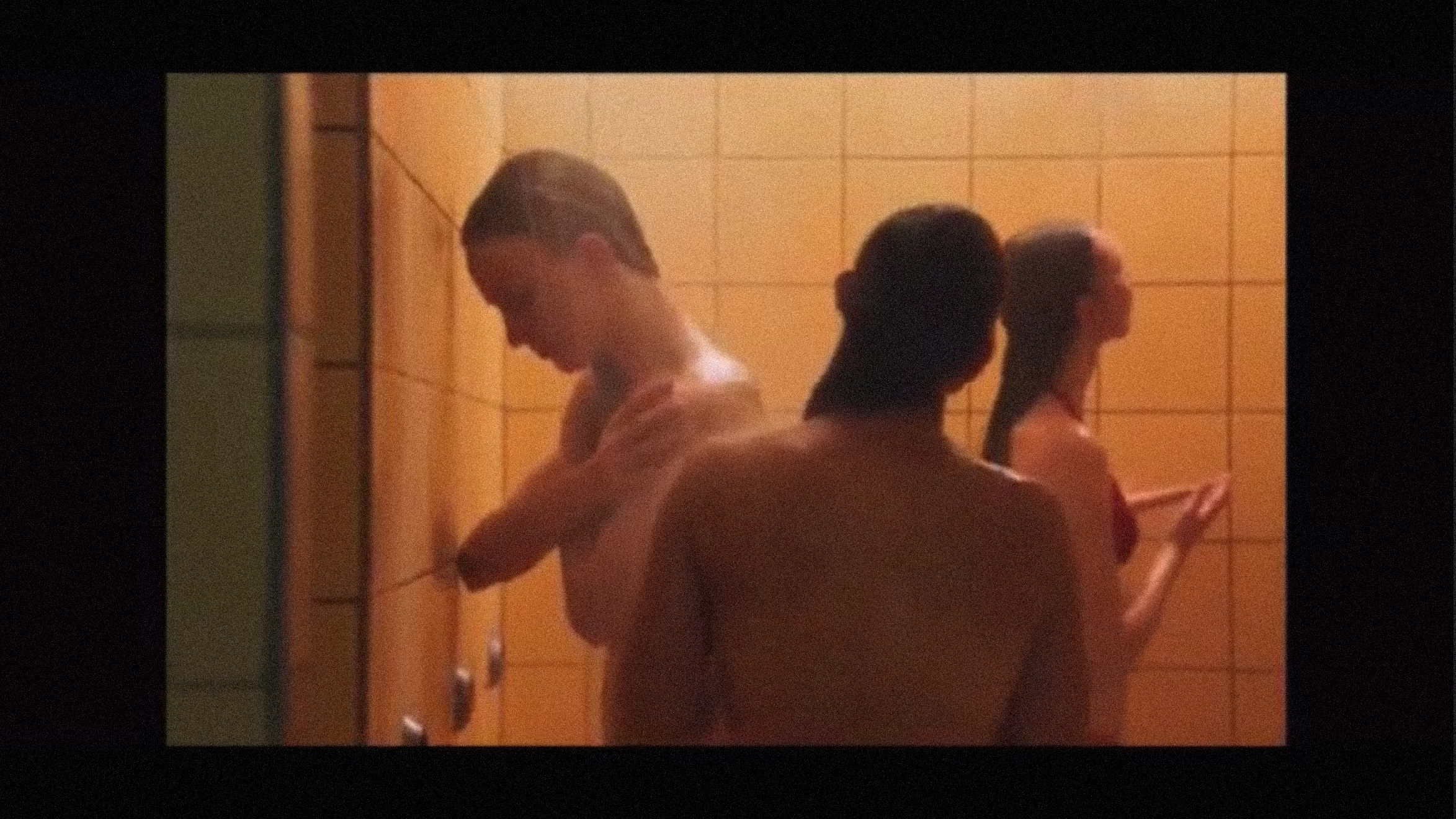
Soap Opera (still), 2026. Video research, 24 films — 10 min. "Soap Opera" assembles bath scenes from across the history of cinema, reframing footage typically shot through the male gaze toward a female perspective. The bathroom emerges not as a space of rest but as a site of pressure, where cleansing never reaches completion but repeats as a loop in which the woman is always already insufficient and must begin again.
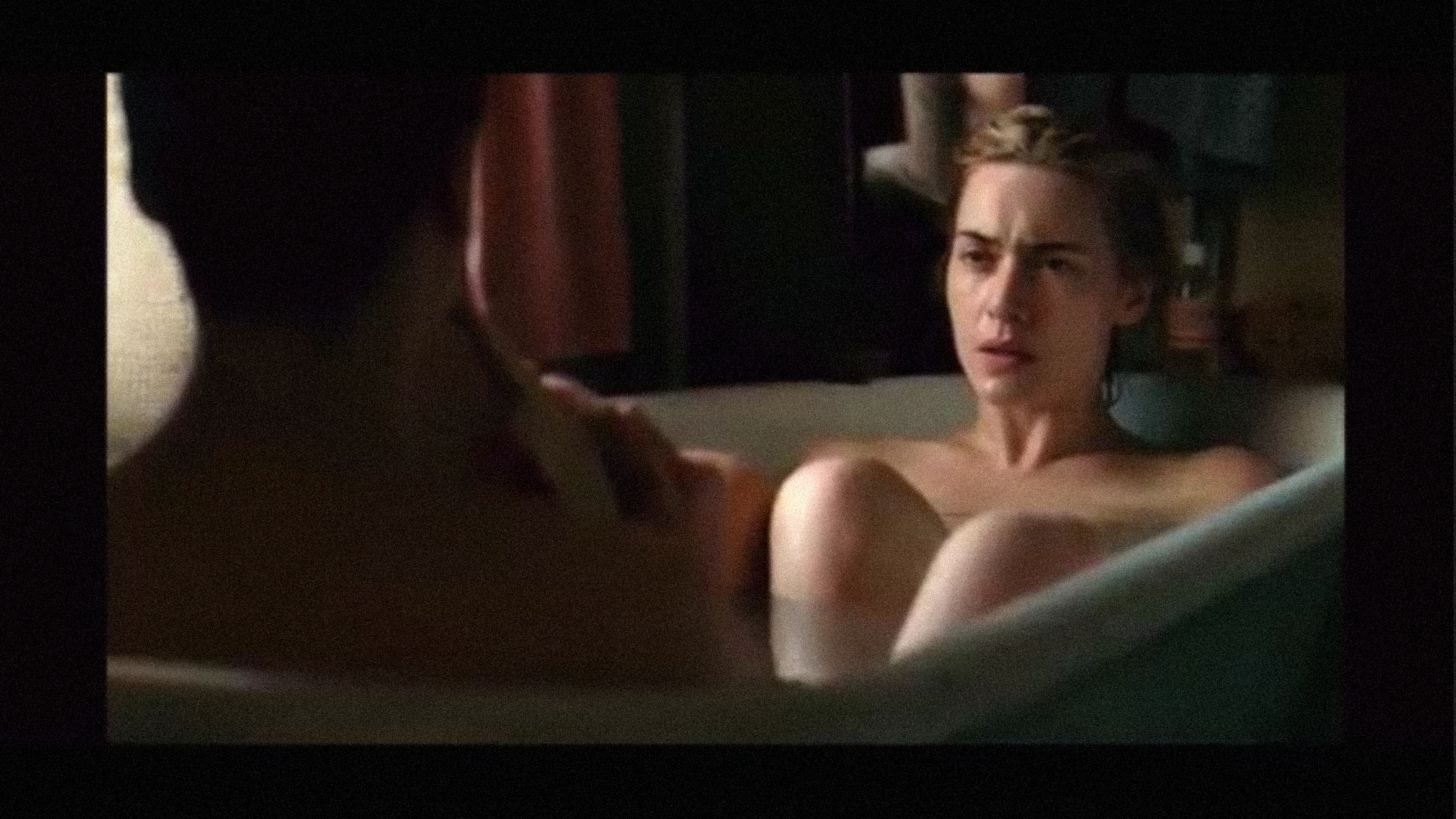
Soap Opera (still), 2026. Video research, 24 films — 10 min. "Soap Opera" assembles bath scenes from across the history of cinema, reframing footage typically shot through the male gaze toward a female perspective. The bathroom emerges not as a space of rest but as a site of pressure, where cleansing never reaches completion but repeats as a loop in which the woman is always already insufficient and must begin again.
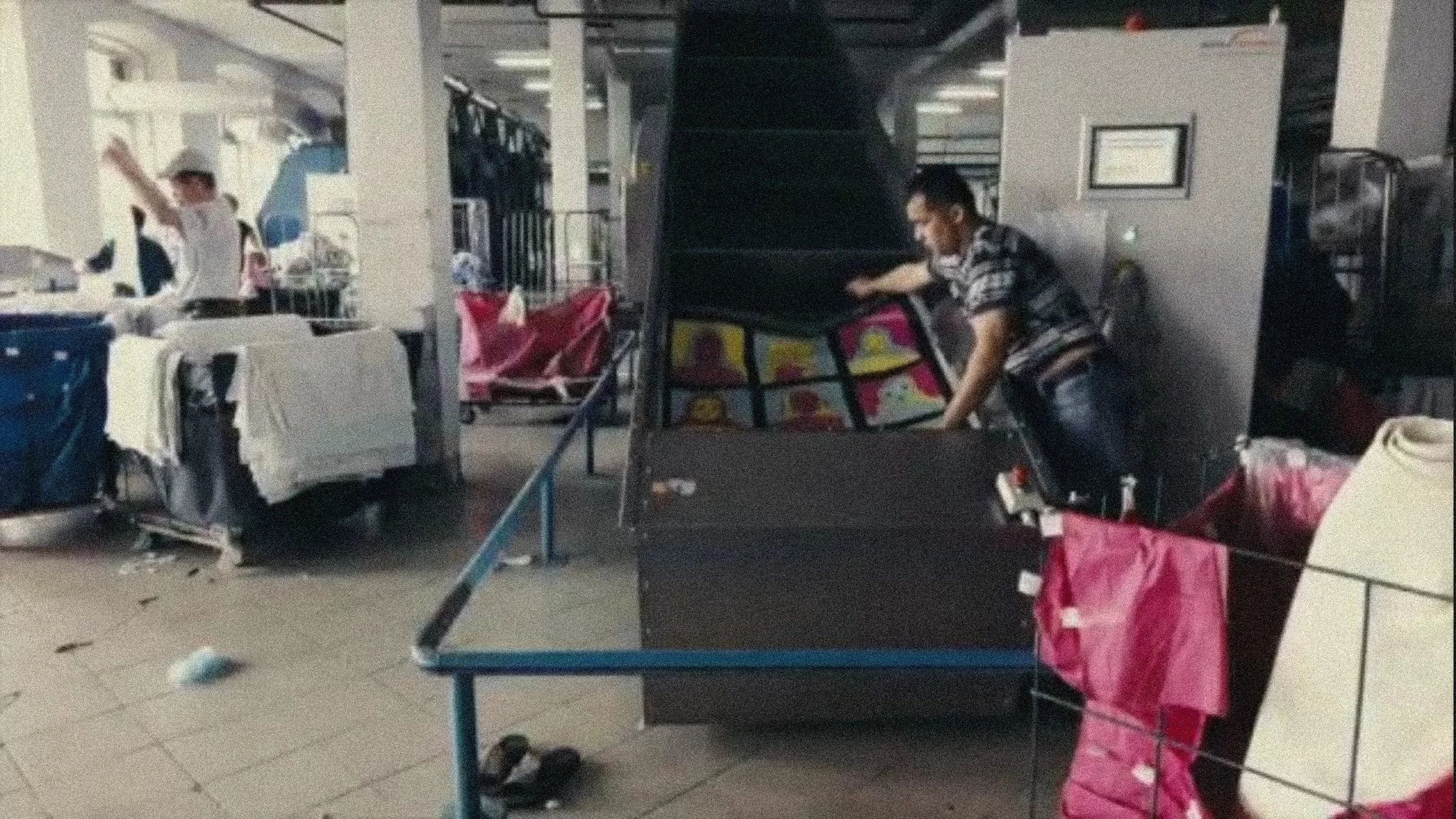
Laundry (still), 2026. Video research — 8 min., 40 sec. "Laundry" works with found footage to make invisible labor visible, tracing how washing is represented across cultures — from domestic rituals to the large industrial laundries of Mumbai. The work reveals washing as a site of social inequality: between those who wash and those for whom things are washed, between waged labor and unpaid domestic care.
Laundry (still), 2026. Video research — 8 min., 40 sec. "Laundry" works with found footage to make invisible labor visible, tracing how washing is represented across cultures — from domestic rituals to the large industrial laundries of Mumbai. The work reveals washing as a site of social inequality: between those who wash and those for whom things are washed, between waged labor and unpaid domestic care.
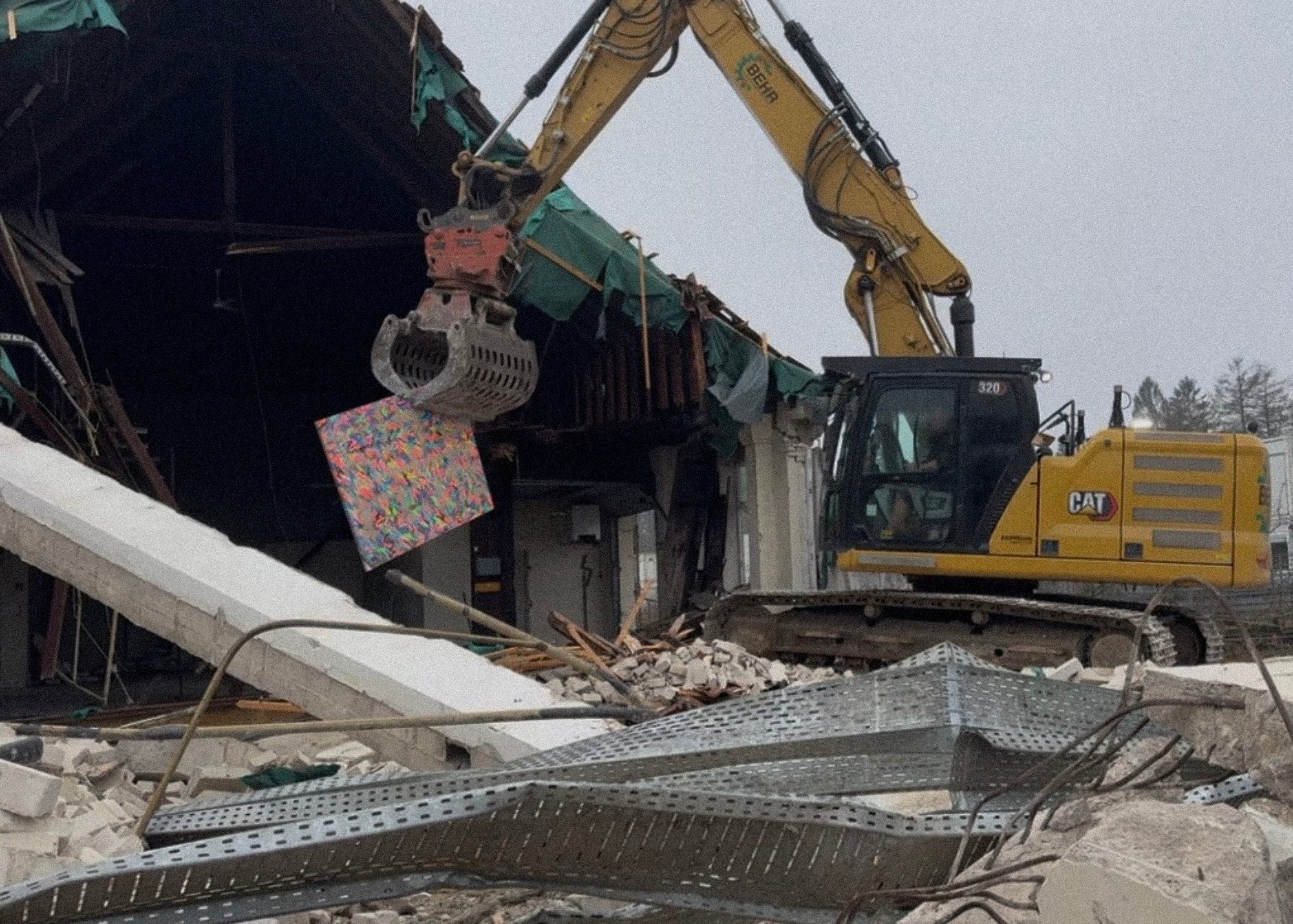
Living in a State of Disappearance, 2026. Video — 7 min. "Living in a State of Disappearance" documents the demolition of a building in which an artist's paintings were stored, watching the works transform into construction debris and enter systems of clearance, sorting, and disposal. The work reflects on the precarious conditions of artistic production and the structural inaccessibility of the archive in which disappearance is not a singular loss but a sustained condition that precedes and accompanies production itself.
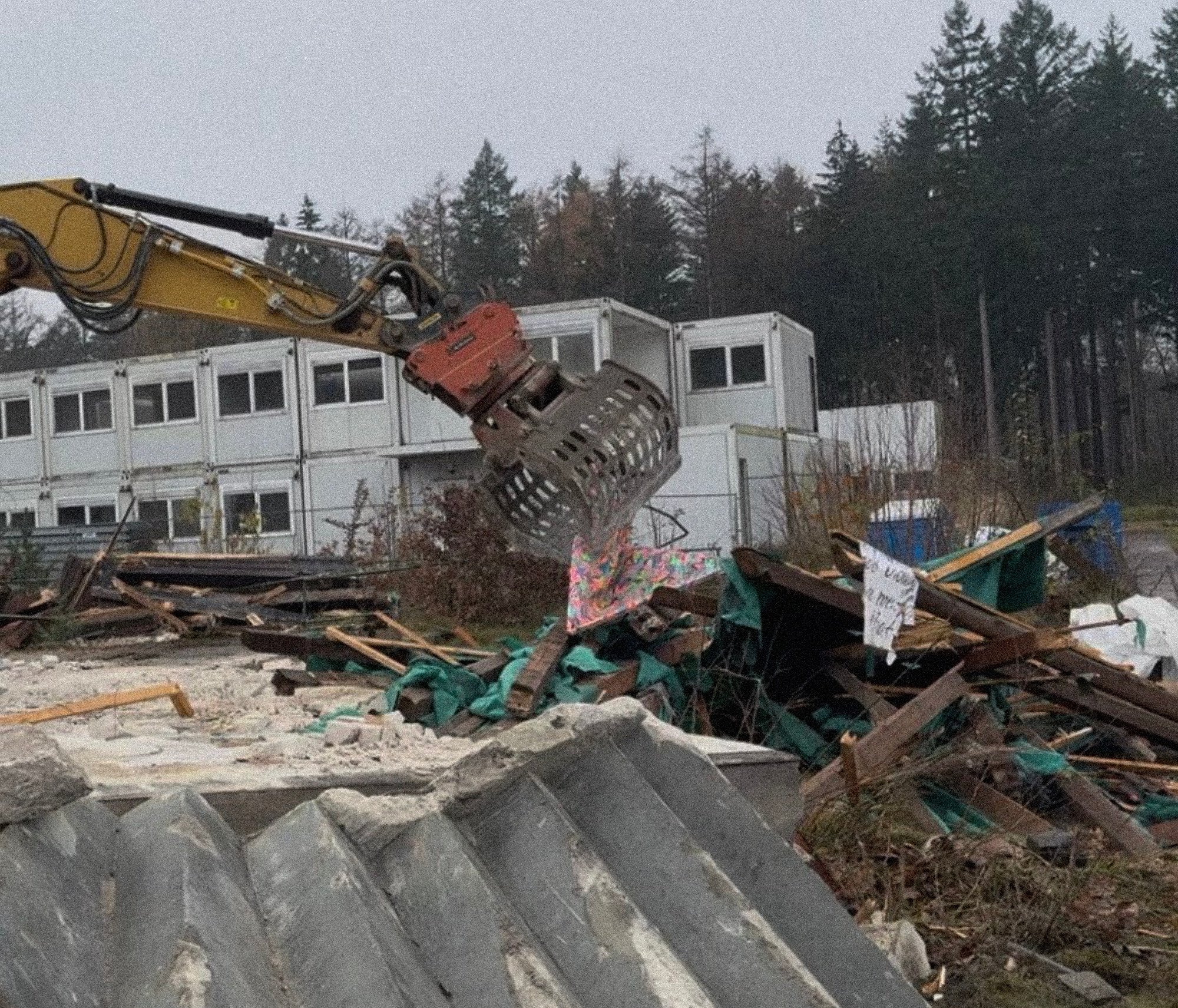
Living in a State of Disappearance, 2026. Video — 7 min. "Living in a State of Disappearance" documents the demolition of a building in which an artist's paintings were stored, watching the works transform into construction debris and enter systems of clearance, sorting, and disposal. The work reflects on the precarious conditions of artistic production and the structural inaccessibility of the archive in which disappearance is not a singular loss but a sustained condition that precedes and accompanies production itself.